← All Posts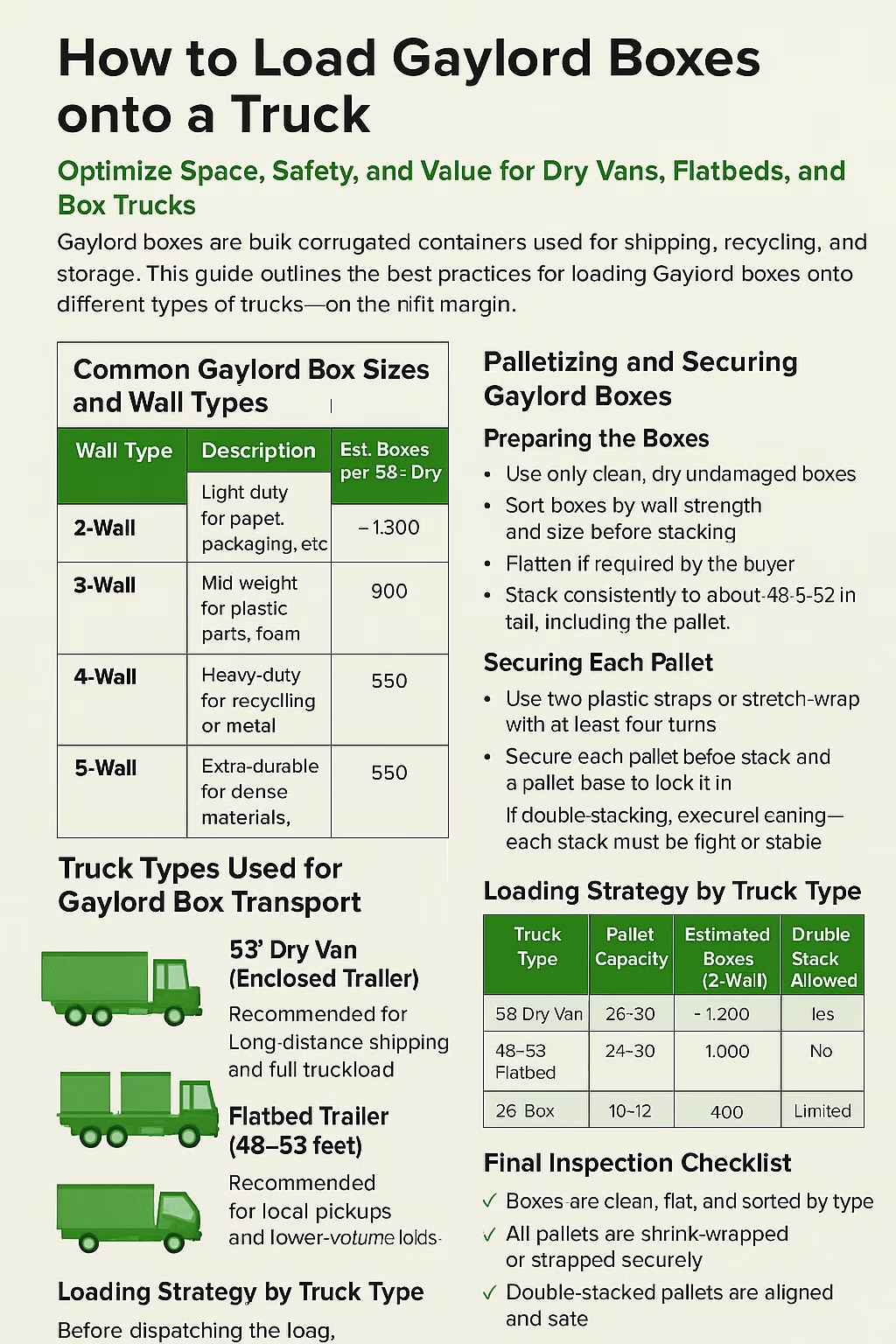
This guide reflects the most common Gaylord box types and practical loading strategies for 2025.
How to Load Gaylord Boxes onto a Truck
May 5, 2025
How to Load Gaylord Boxes onto a Truck
Optimize Space, Safety, and Value for Dry Vans, Flatbeds, and Box Trucks Gaylord boxes are bulk corrugated containers used widely for shipping, recycling, and storage. Their strength and size vary by wall thickness, which directly affects their load capacity and ideal use cases. This guide explains how to load 2-, 3-, 4-, and 5-wall Gaylord boxes onto trucks efficiently, focusing on maximizing space and safety.Gaylord Box Wall Thickness and Capacity
| Wall Type | Description | Typical Load Capacity (lbs) | Est. Boxes per 53' Dry Van (Double-Stacked) |
|---|---|---|---|
| 2-Wall | Light-duty; BC flute; for paper, packaging | < 1,000 | ~1,300 |
| 3-Wall | Medium-duty; triple layer; for plastics, textiles | ~1,000–3,000 | ~900 |
| 4-Wall | Industrial-grade; reinforced; for heavy loads | 2,000–2,500 | ~550 |
| 5-Wall | Extra-durable; highest tensile strength; for dense materials | Up to 5,000 | ~550 |
- 2-Wall boxes are the most economical, suited for lightweight goods and large volume shipments.
- 3-Wall boxes balance cost and strength, ideal for medium-weight items like recyclable electronics or textiles.
- 4- and 5-Wall boxes are industrial-grade, designed for heavy, dense materials such as metal scrap and industrial parts. These are the most common in heavy-duty shipping.
Truck Types and Loading Recommendations
1. 53-Foot Dry Van
- Best for: Long-distance and full truckload shipments
- Pallet capacity: 26–30 pallet positions; double-stacked totals ~52 pallets
- Box capacity:
- ~1,300 lightweight 2-wall boxes
- ~900 medium 3-wall boxes
- ~550 heavy-duty 4- or 5-wall boxes
- Stack height: Max 52 inches including pallet
- Loading tips:
- Load pallets sideways (48" depth across trailer width) to maximize rows
- Double-strap or shrink-wrap pallets securely
- Use load bars or dunnage bags to prevent shifting
- Weight capacity: Up to 45,000 lbs evenly distributed
2. Flatbed Trailer (48–53 feet)
- Best for: Strong 4- or 5-wall boxes that tolerate weather exposure
- Pallet capacity: 24–30 pallets (no double-stacking recommended)
- Loading tips:
- Use heavy-duty strapping and tarps
- Employ edge protectors to prevent damage during tensioning
3. 26-Foot Box Truck
- Best for: Local deliveries and smaller loads
- Pallet capacity: 10–12 pallets
- Box capacity: Around 250–400 boxes depending on wall thickness
- Stacking: Limited double-stacking due to lower ceiling height (90–100 inches)
Palletizing and Securing Gaylord Boxes
- Use clean, dry, undamaged boxes sorted by wall strength and size
- Stack boxes consistently to 48–52 inches tall including pallet
- Secure pallets with two plastic straps (mid and top) or stretch-wrap (≥4 turns)
- Ensure no overhang or leaning; stacks must be stable before double-stacking
- Double-stacking is common and safe for 3-, 4-, and 5-wall boxes in dry vans
Final Loading Checklist
- Boxes sorted by wall type and size
- Pallets securely strapped or shrink-wrapped
- Double-stacked pallets aligned and stable
- Load tight with no wasted floor space or empty rows
- Trailer interior clean and dry
- Final row secured with load bars or dunnage bags
Conclusion: Efficient Loading Across All Wall Types
Understanding Gaylord box wall thicknesses and their load capacities is key to optimizing truck space and freight safety. While 2- and 3-wall boxes serve lighter and medium-weight needs with higher quantities per trailer, 4- and 5-wall boxes are the industrial standard for heavy loads, with about 550 boxes fitting in a 53-foot dry van when double-stacked. Proper palletizing, securing, and truck choice ensure cost-effective, damage-free shipping.This guide reflects the most common Gaylord box types and practical loading strategies for 2025.